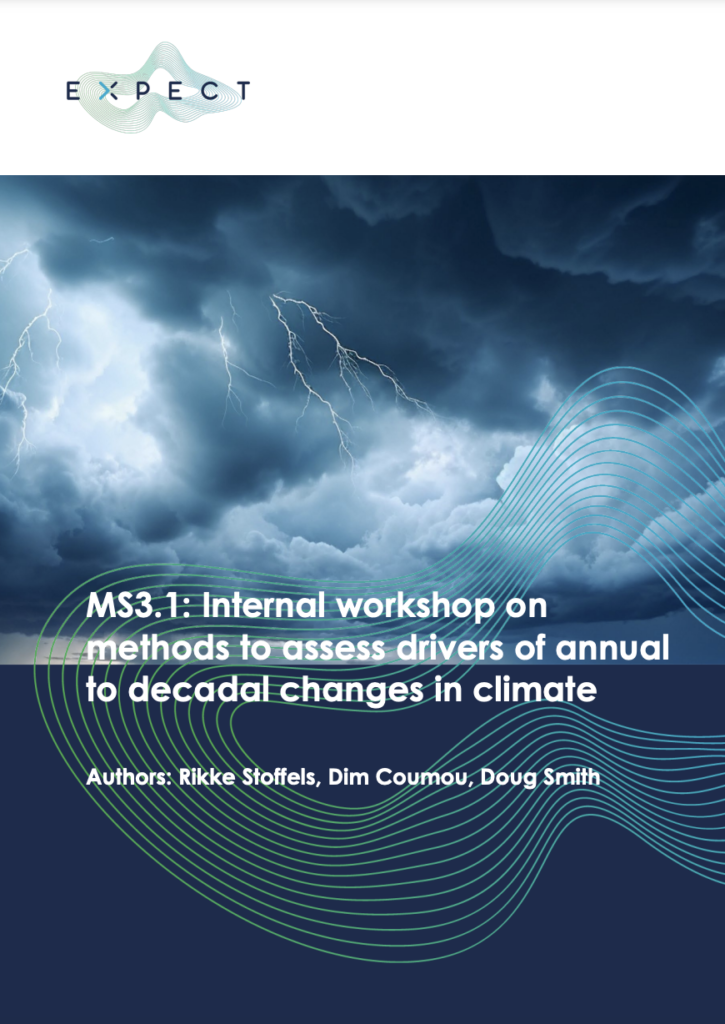
Filter resources by category:
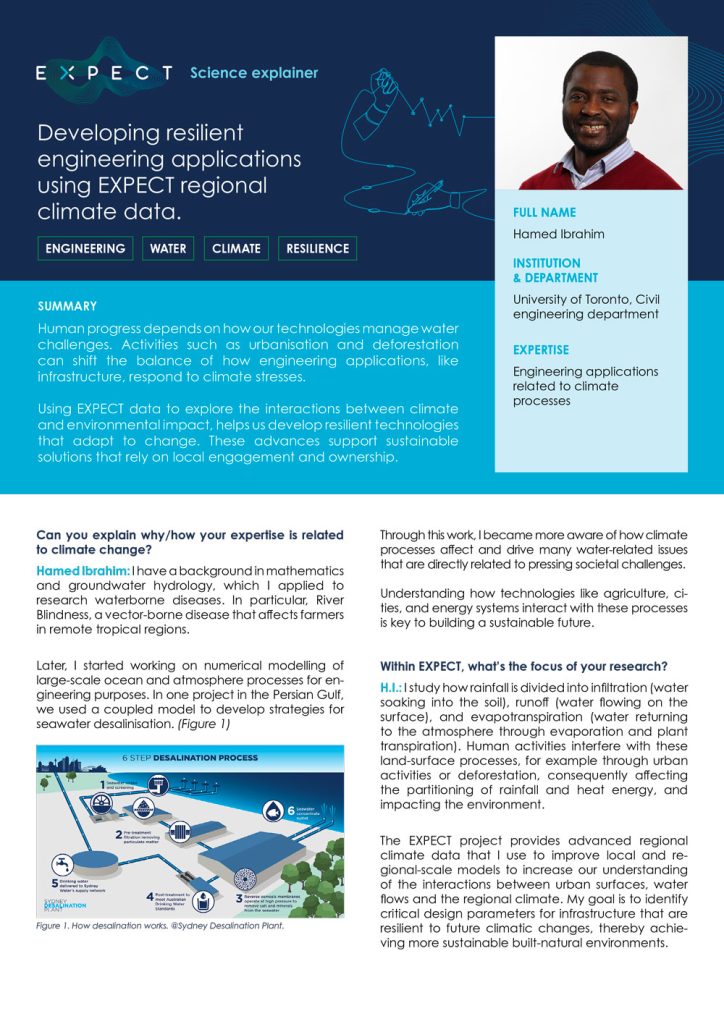
Developing resilient engineering applications using EXPECT regional climate data
Data-driven seasonal climate predictions via variational inference and transformers
Emerging hotspots of agricultural drought under climate change
Anthropogenic climate change leads to a pronounced reorganisation of wintertime North Atlantic atmospheric circulation regimes
Precipitation, moisture sources and transport pathways associated with summertime North Atlantic deep cyclones
First Analysis of Climate Forcing and Response to Updated Historical Anthropogenic Aerosol With the New CMIP7 Model ICON XPP
MS 8.1 – Report on status of tool support for high resolution data in the CF and FAIR contexts
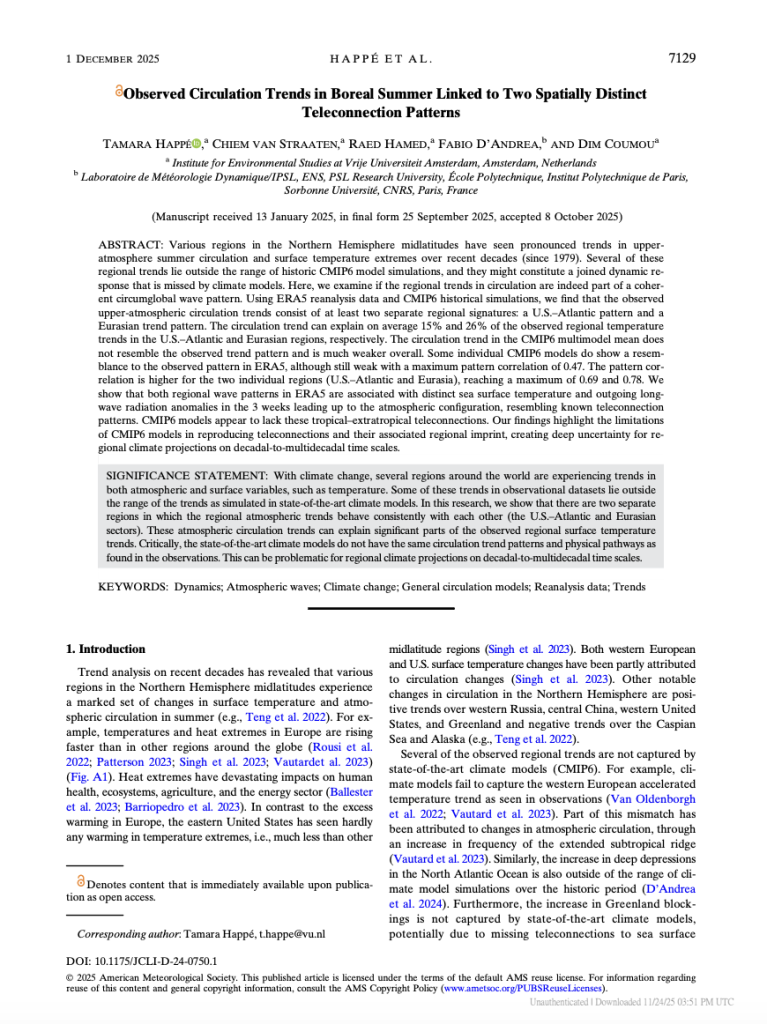
Observed Circulation Trends in Boreal Summer Linked to Two Spatially Distinct Teleconnection Patterns
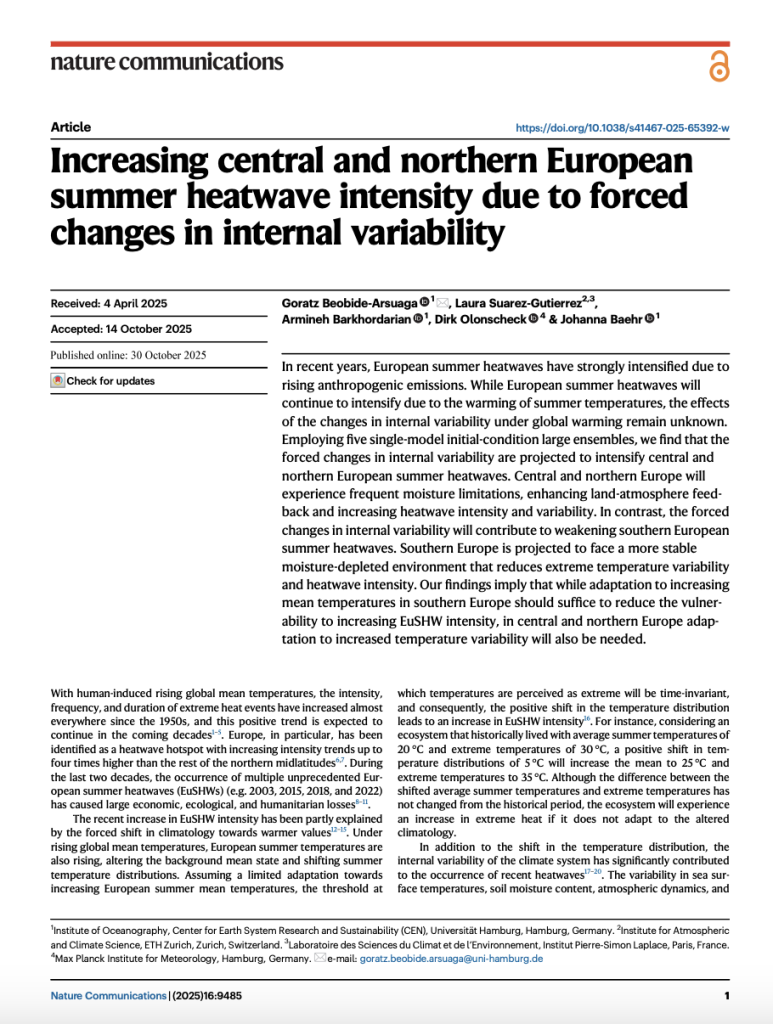
Increasing central and northern European summer heatwave intensity due to forced changes in internal variability
MS3.2: Workshop drivers of annual to decadal changes in climate

EXPECT at EGU: Gerard Marcet-Carbonell

EXPECT at EGU: Rikke Stoffels

EXPECT at EGU: Dim Coumou

EXPECT at EGU: Markus Donat
EXPECT introductory video
Climate extremes and risks: links between climate science and decision-making
Explaining and predicting the Southern Hemisphere eddy-driven jet

Data Infrastructure Setup
Dynamical systems methods to understand projected heatwave intensification
CO2-induced climate change assessment for the extreme 2022 Pakistan rainfall using seasonal forecasts
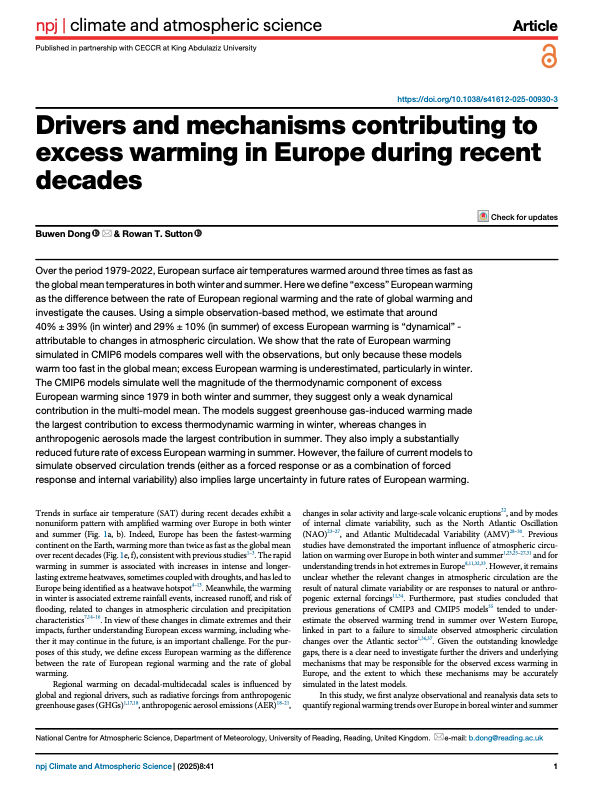
Drivers and mechanisms contributing to excess warming in Europe during recent decades

Improving the forecast quality of near-term climate projections by constraining internal variability based on decadal predictions and observations
Increasing central and northern European summer heatwave intensity due to forced internal variability changes
Record Warmth of 2023 and 2024 was Highly Predictable and Resulted From ENSO Transition and Northern Hemisphere Absorbed Shortwave Anomalies

Observation-constrained projections reveal longer-than-expected dry spells

MS 1 – EO and model data for process-based evaluation
Historical forcing datasets
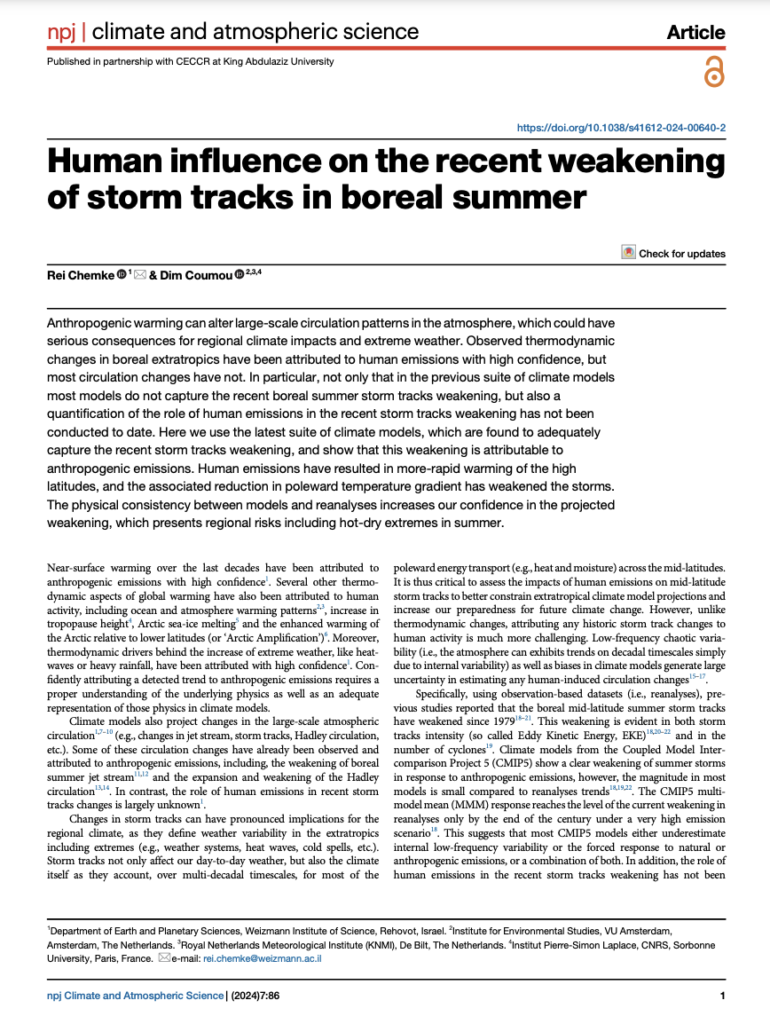
Human influence on the recent weakening of storm tracks in boreal summer

Horizon projects using environmental observations and artificial intelligence for the benefit of science and society
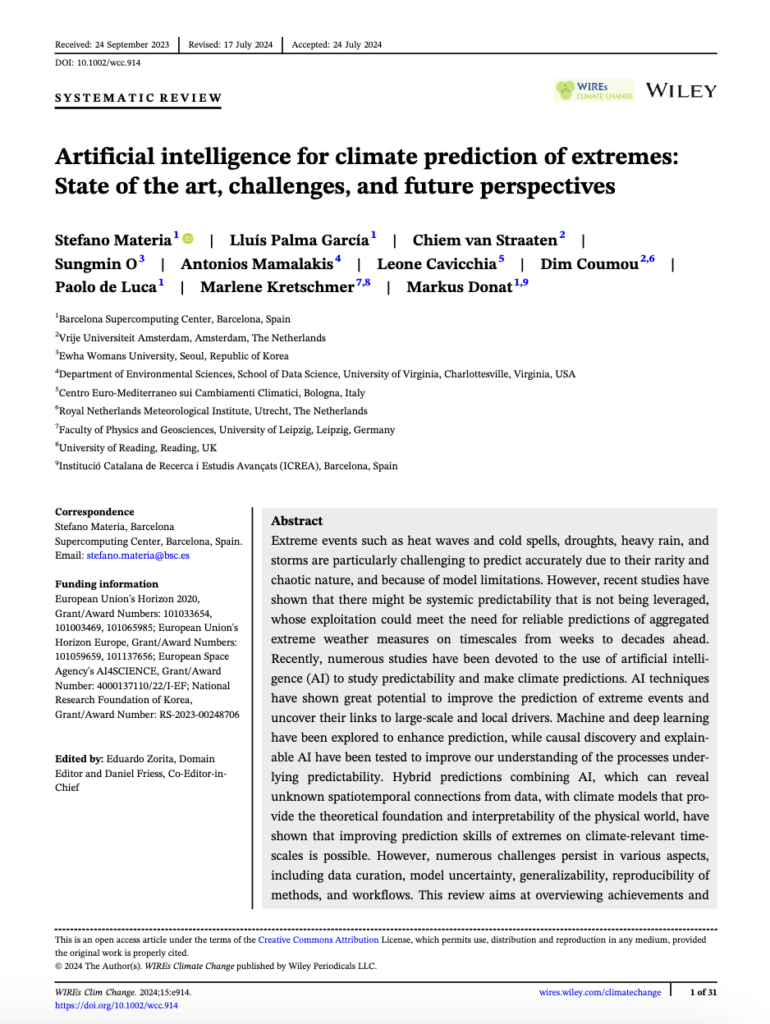
Artificial intelligence for climate prediction of extremes: State of the art, challenges, and future perspectives
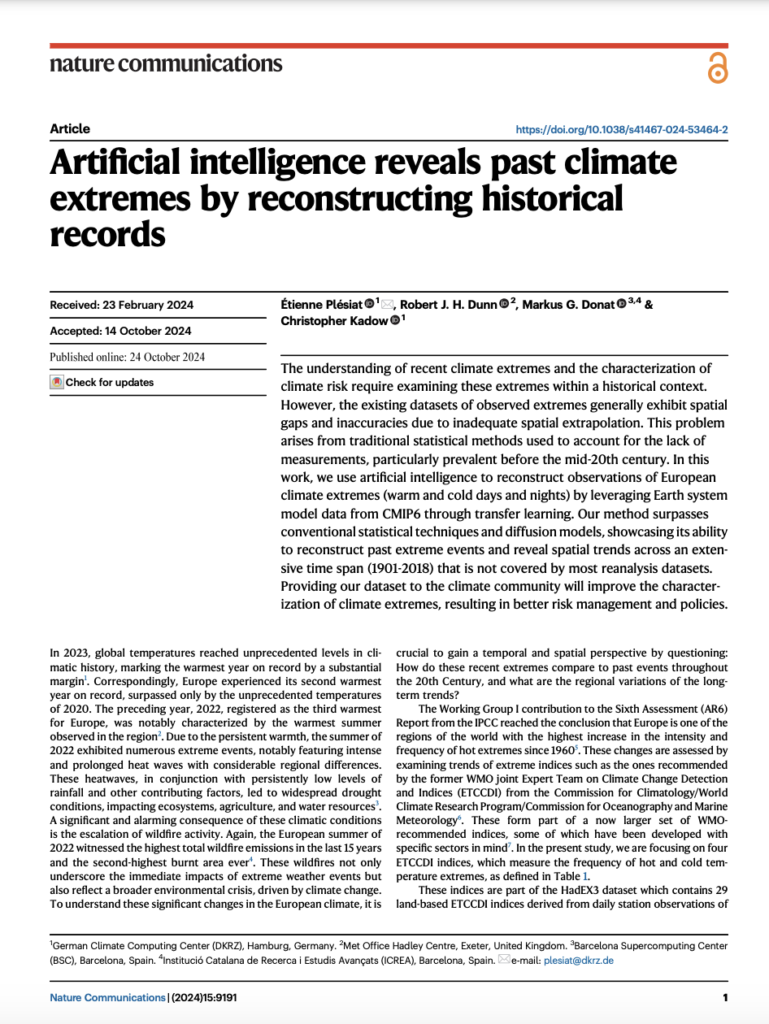
Artificial intelligence reveals past climate extremes by reconstructing historical records